

Between 1973 and 1981, the National Museum of Ireland, led by Pat Wallace, conducted large-scale excavations across a 4-acre site. The dig confirmed the area as one of the city’s oldest settlements, revealing a densely populated and prosperous “Hiberno-Norse” commercial center featuring 100 dwellings and thousands of artifacts spanning five centuries. However, the project faced significant controversy and disruption: Destruction and Halt (1973): Bulldozers destroyed parts of the site, including a medieval city wall, before Minister James Tully issued a temporary cease order in November. This sparked public demand for an archaeological park. Controversial Approval (1974): Rejecting alternative locations, Tully approved a revised plan in February to build the planned office development. The blocks were relocated to the Fishamble Street side to preserve views of Christchurch Cathedral. Public Backlash: Heritage group An Taisce heavily criticized the compromise as the “worst possible solution,” arguing the modern offices would clash incongruously with the historic cathedral. Speaker Bio In 1974 Pat Wallace was appointed as the archaeologist to excavate what was to become one of the most controversial sites in Irish living memory. Wood Quay was intended as the location of the proposed offices for Dublin Corporation. This area was the site of a Viking settlement and would yield artefacts and information of enormous significance. Dr Wallace, had the job of assessing the archaeological value of Wood Quay, including anything he found there, so that building work could commence quickly Following his success with the Dublin excavations, Dr. Wallace went on to serve as Director of the National Museum of Ireland, a role he held for 24 years until 2012. Under his directorship, the museum expanded significantly, most notably with the opening of the Decorative Arts & History branch at Collins Barracks in Dublin and the establishment of the Museum of Country Life at Turlough Park in Castlebar, Co. Mayo. Guest Booking View on Zoom Lecture Title: Wood QuaySpeaker: Pat WallaceDate: 02 December 2026Time: 20:00Lecture Location: Rathmichael School, Stonebridge Road, Shankill, Co. DublinCost for RHS Members: FreeCost for guests: €5
Category: Winter Series
04 Nov 2026 | Origin of the O’Neill and O’Donnell Dynasties | Brian Lacey

The O’Donnell dynasty (Irish: Ó Dónaill or Ó Domhnaill, Ó Doṁnaill or Ua Domaill; meaning “descendant of Dónal”) were the dominant Irish clan of the kingdom of Tyrconnell in Ulster in the north of medieval and early modern Ireland. The O’Neill dynasty (Irish: Ó Néill) are a lineage of Irish Gaelic origin that held prominent positions and titles in Ireland and elsewhere. As kings of Cenél nEógain, they were historically one of the most prominent family of the Northern Uí Néill, along with the O’Donnell dynasty. Some O’Neills state that their ancestors were kings of Ailech during the Early Middle Ages, as descendants of Niall of the Nine Hostages. Speaker Bio Brian Lacey (was born in Dublin in 1949) is an archaeologist and historian who specializes in the in the history of north-west of Ireland from AD 500–1200. A former university lecturer, museum director, and head of the Discovery Programme at the Archaeological Research Institution, he is author of about fifteen books and many research papers. Guest Booking View on Zoom Lecture Title: Origin of the O’Neill and O’Donnell DynastiesSpeaker: Brian LaceyDate: 04 November 2026Time: 20:00Lecture Location: Rathmichael School, Stonebridge Road, Shankill, Co. DublinCost for RHS Members: FreeCost for guests: €5
07 Oct 2026 | History of Howth Castle | Rob Goodbody

The History of Howth Castle For over eight centuries, Howth Castle represented one of the longest continuously inhabited private residences in Europe. From its inception until its landmark sale in 2019, the estate was held by the St Lawrence family (later Gaisford-St Lawrence) for 842 years, establishing it as a site of profound significance in Irish aristocratic and architectural history. The estate’s origins date to 1177, when Almeric Tristram assisted John de Courcy in defeating Norse forces at Evora Bridge. Tristram subsequently adopted the surname St Lawrence to commemorate the feast day of the battle and constructed an initial timber fortification on Tower Hill. By 1235, the family had relocated to the present site. The structural evolution of the castle serves as an exceptional record of Irish domestic architecture. The earliest surviving masonry, which includes the formidable medieval Keep and Gate Tower, dates to approximately 1450. Over the subsequent centuries, the fortress was gradually adapted into a grand aristocratic residence. Notable architectural interventions include a comprehensive Georgian remodeling in 1738 and a masterful Arts and Crafts renovation in 1911, directed by the prominent British architect Sir Edwin Lutyens, who integrated a new library wing and formalized the gardens. A prominent fixture in the castle’s historical narrative is the 1576 encounter with the Connacht chieftain Gráinne Ní Mháille (Grace O’Malley). According to established local tradition, upon finding the castle gates locked during the family’s dinner, a slighted Ní Mháille abducted the Earl’s grandson. The heir was reportedly returned only upon the family’s pledge to permanently keep their doors open to unexpected visitors and to set an additional place at the dining table. The St Lawrence family formally honored this tradition for centuries. The historic tenure of the St Lawrence lineage concluded in 2019 when the castle, the hotel, and the surrounding demesne were acquired by Tetrarch Capital. Guest Booking View via Zoom Lecture Title: History of HowthSpeaker: Rob GoodbodyDate: 07 October 2026Time: 20:00Lecture Location: Rathmichael School, Stonebridge Road, Shankill, Co. DublinCost for RHS Members: FreeCost for guests: €5
1 Apr 2026 | Houses of Meath | Aisling Durkan

4 Mar 2026 | The Irish Ringforts after Three Decades | Matthew Stout

4 Feb 2026 AGM | 2 Short Talks

The Annual General Meeting will take place followed by 2 short talks: a short introduction to the updated website by John Roden followed by a talk about Lafcadio Hearn by Richard Ryan.
7 Jan 2026 | The Irish Jacobite army 1689-91 | Harman Murtagh

Dr Harman Murtagh is a former senior lecturer and visiting fellow at Athlone Institute of Technology, now a constituent college of the new Technological University of the Shannon. Educated in the Trinity history school and the Law Society of Ireland, he is a former president of the Military History Society of Ireland whose journal The Irish Sword, he edited for twenty-four years. He has also served as president of the Group for the Study of Irish Historic Settlement. He has written four books, the latest of which is The Irish Jacobite army, published by Four Courts Press in 2024. He is also the author of numerous articles, book chapters and contributions to The Oxford Dictionary of National Biography, The Dictionary of Irish Biography and the ‘Athlone’ fascicle of The Royal Irish Academy’s Irish Historic Towns Atlas. A companion volume to The Irish Jacobite army is in preparation.
5 Nov 2025 | A Photographic Career in Ruins | Con Brogan
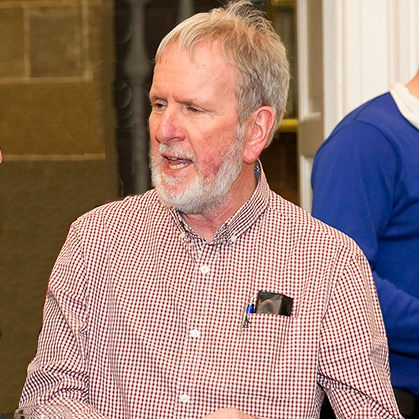
Zoom Link for members Booking for non-members Con Brogan was senior photographer for Ireland’s National Monuments Service, now retired, who documented Irish historical sites for over 40 years. This talk shares his experiences and photographs from his time working with the service. He will show many of the wonderful images that he made and tell us about the circumstances of taking them.
1 Oct 2025 | Monasticism in Ireland | Edel Bhreathnach
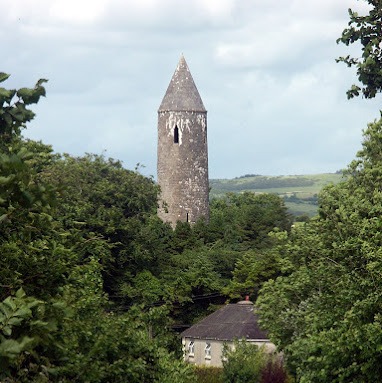
Zoom Link for Members Booking for non-menbers Irish monasticism, a prominent force from the 5th century, saw communities of religious individuals living, working, and studying in centers that became known as the “Island of Saints and Scholars”. These monasteries fostered intense spiritual and intellectual activity, preserving texts, creating illuminated manuscripts, and establishing learning centers that influenced Europe. The earliest phase of monasticism (6th-12th centuries) featured distinct Celtic monasteries with unique architecture, while a later phase (12th century onwards) saw the introduction of continental European monastic orders, establishing different architectural styles and practices. The history of monasticism in early Ireland is dominated by its flourishing during the sixth and seventh centuries, a period dominated by Columba of Iona and Columbanus of Bobbio, and later by the ‘reform’ spearheaded by Malachy of Armagh during the twelfth century. But what of monasticism in Ireland during the intervening period? Regarded as different from ‘mainstream’ Anglo-Saxon and continental monasticism, monastic life in Ireland has not been fully understood in scholarly discussions about the existence of distinct ‘monasticisms’ throughout Christianity. The Irish sources, many written in the vernacular, are not readily accessible and are viewed as unconventional. The secularization of monasticism in Ireland has overshadowed evidence for a thriving lived monasticism. This major study concentrates on those men and women who followed a monastic life, especially between the tenth and thirteenth centuries, and who maintained a universal monastic ideology while incorporating monasticism into their own cultural environment. Our spearker, Edel Bhreathnach, was formerly Chief Executive Officer of the Discovery Programme, and has published extensively on a wide range of topics relating to medieval Irish history and culture. Her recent book on Monasticism in Ireland is published by the Four Courts Press (ISBN: 978-1-80151-117-9)
